
Autism Diet Plan: 50 Nutrient-Dense Foods to Rotate Weekly
The Ultimate Autism Diet Plan: A Doctor's Guide to Rotating 35–50 Nutrient-Dense Foods Every Week
As a doctor, one of the questions I get most often is: "What should my autistic child eat?"
There is no single "autism diet" that works for every child. Autism is a neurodevelopmental condition, not a disease that food can cure. But good nutrition plays a real role in supporting your child's growth, immune function, brain development, bowel health, and energy levels.
Many autistic children eat a narrow range of foods because of sensory sensitivities, food rigidity, anxiety around new foods, oral-motor difficulties, or gastrointestinal problems. Over time, this can leave gaps in iron, zinc, protein, vitamin D, calcium, magnesium, omega-3 fatty acids, and several B vitamins.
Rather than focusing on eliminating foods, your goal should be to widen food variety. A practical target is to rotate 35 to 50 different plant foods every week, alongside quality proteins, healthy fats, and fermented foods. Research into dietary diversity suggests that eating a broader range of plant foods is linked to a more diverse gut microbiome, and while scientists are still studying the gut-brain relationship in autism, this variety-first approach naturally increases fibre, vitamins, minerals, antioxidants, and beneficial plant compounds.Metabolomic studies comparing autistic and non-autistic children have identified abnormalities that cluster around redox status, inflammation, and gut microbiome signals, which is one reason many clinicians now emphasise gut-supportive nutrition alongside standard care.
This guide brings together plant foods, animal proteins, healthy fats and oils, and fermented foods into one weekly rotation plan, with Nigerian staples placed side by side with international options, so you always have something familiar and something new to try.
Why Food Diversity Matters for Your Autistic Child
Instead of serving the same three vegetables every week, rotating colours, families, and origins does two things: it reduces the risk of nutrient gaps, and it gently expands your child's food exposure over time, which can support feeding therapy goals for selective eaters.
Use the categories below as a shopping and meal-planning checklist. You don't need to hit every food every week — aim for variety within each group, and let your child's sensory preferences, allergies, and any diagnosed medical conditions guide the final list. Always speak with your child's paediatrician, physician, or a registered dietitian before starting new supplements or making major dietary changes.
Healthy Carbohydrates: Fuel for Growth and Development
Healthy carbohydrates are an important part of a balanced diet for autistic children. They provide the energy needed for growth, learning, play, and everyday activities. Rather than avoiding carbohydrates, focus on wholesome, minimally processed options and serve them alongside protein, healthy fats, and vegetables to create balanced meals.
Healthy Carbohydrate Choices
Root Vegetables & Tubers
- - Sweet potatoes
- - Yam
- - Cocoyam
- - Irish potatoes
Whole Grains
- - Brown rice
- - White rice
- - Oats
- - Millet
- - Sorghum
- - Acha (fonio)
- - Whole maize
Other Nutritious Staples
- - Plantain (ripe or unripe)
- - Beans
- - Lentils
- - Cowpeas
- - Chickpeas
Simple Nigerian Meal Ideas
- - Boiled yam with eggs and vegetables
- - Sweet potatoes with grilled fish and steamed spinach
- - Rice with chicken and mixed vegetables
- - Beans with ripe or unripe plantain
- - Millet or acha porridge with fruit and groundnuts
Parent Tip: Aim to include a healthy carbohydrate, a good source of protein, colourful vegetables or fruit, and a healthy fat at most meals. Variety is more important than perfection, and there is no single "autism diet" that is right for every child.
Cruciferous Vegetables
| Food | Key Nutrients | Why It Matters |
| Broccoli | Vitamin C, folate, fibre, sulforaphane | Antioxidant and immune support; digestion |
| Broccoli sprouts | Concentrated sulforaphane precursors | Early clinical research found that many participants receiving daily sulforaphane experienced improvements in social interaction, verbal communication, and repetitive behaviours compared with placebo, though larger confirmatory trials are still needed before this becomes a routine recommendation |
| Cauliflower | Vitamin C, choline | Brain development, gut health |
| Cabbage | Vitamin K, vitamin C | Gut and immune health |
| Brussels sprouts | Folate, vitamin K | Anti-inflammatory nutrients |
| Kale | Vitamins A, C, K, lutein | Eye and immune health |
| Bok choy | Vitamin C, calcium | Bone and immune support |
Leafy Green Vegetables (Nigerian & International)
| Food | Key Nutrients | Why It Matters |
| Spinach | Folate, magnesium, iron | Brain function, red blood cell production |
| Ugu (fluted pumpkin leaves) | Iron, folate | Supports healthy blood formation |
| Pumpkin leaves | Vitamin A, iron | Immune support |
| Bitter leaf | Antioxidants | Traditional nutrient-rich vegetable |
| Waterleaf | Calcium, magnesium | Mineral source |
| Swiss chard | Magnesium, potassium | Muscle and nerve function |
Colourful Vegetables
| Food | Key Nutrients | Why It Matters |
| Beetroot | Nitrates, folate | Supports healthy blood flow |
| Carrots | Beta-carotene | Vision and immune health |
| Sweet potato | Vitamin A, fibre | Gut and immune health |
| Bell peppers | Vitamin C | Antioxidant support |
| Tomatoes | Lycopene | Antioxidant protection |
| Okra | Fibre | Bowel regularity |
Mushrooms (a simple way to add variety)
| Food | Key Nutrients | Why It Matters |
| Shiitake | Beta-glucans | Immune support |
| Oyster mushrooms | B vitamins | Energy metabolism |
| Button mushrooms | Selenium | Antioxidant defence |
Fruits and Fresh/Natural Juices
Whole fruits are generally better than juice, since they retain fibre that supports digestion. If you do serve juice, keep portions small and pair with whole food.
| Food | Key Nutrients | Why It Matters |
| Blueberries | Anthocyanins | Brain-supportive antioxidants |
| Strawberries | Vitamin C | Immune health |
| Blackberries | Fibre | Gut microbiome support |
| Oranges (fresh juice, small portion) | Vitamin C | Collagen formation, iron absorption |
| Kiwi | Vitamin C | Digestion |
| Apples | Pectin | Prebiotic fibre |
| Pears | Soluble fibre | Digestive health |
| Avocado | Healthy fats, folate | Brain development |
| Pomegranate | Polyphenols | Antioxidant support |
| Pawpaw (papaya) | Vitamin A, digestive enzymes | Digestion |
| Watermelon | Hydration, lycopene | Hydration and antioxidants |
| Mango | Beta-carotene, vitamin C | Immune and eye health |
Herbs (Fresh, Natural Sources)
| Herb | Main Compounds | Potential Benefit |
| Parsley | Vitamin K | Bone health |
| Basil | Polyphenols | Antioxidant support |
| Rosemary | Rosmarinic acid | Antioxidant properties |
| Thyme | Thymol | Flavour and phytonutrients |
| Mint | Menthol | Digestive comfort |
| Cilantro (coriander leaf) | Vitamin K | Adds fresh diversity |
Spices
| Spice | Main Compound | Benefit |
| Turmeric | Curcumin | Antioxidant, anti-inflammatory |
| Ginger | Gingerols | Digestive support |
| Garlic | Allicin | Immune-supportive compounds |
| Cinnamon | Polyphenols | Flavour without added sugar |
| Black pepper | Piperine | Enhances curcumin absorption |
| Cloves | Eugenol | Antioxidant-rich spice |
Seeds: Small Foods, Big Mineral Content
| Food | Key Nutrients | Why It Matters |
| Pumpkin seeds | Zinc, magnesium, iron, healthy fats | Zinc supports immune function and growth; magnesium supports normal muscle and nerve function |
| Flax seeds | Plant omega-3 (ALA), fibre, lignans | Heart health, digestion, healthy fats |
| Chia seeds | Omega-3, calcium, fibre | Healthy fats and gut support |
| Sesame seeds | Calcium | Bone health |
| Hemp seeds | Complete protein | Protein and healthy fats |
| Sunflower seeds | Vitamin E | Antioxidant protection |
Healthy Nuts
| Food | Key Nutrients |
| Walnuts | Omega-3 fats |
| Almonds | Vitamin E, magnesium |
| Cashews | Zinc, copper |
| Pistachios | Potassium |
| Hazelnuts | Vitamin E |
| Brazil nuts | Selenium (eat sparingly — very high in selenium) |
Animal-Based Foods: At Least 6 Options Weekly
Animal foods provide nutrients that are difficult to obtain in adequate amounts from plants alone, particularly vitamin B12, choline, heme iron, and long-chain omega-3s (DHA/EPA).
| Food | Key Nutrients | Why It Matters |
| Salmon or mackerel | DHA, EPA, vitamin D | Brain development, healthy fats |
| Sardines | Calcium, DHA | Bone and brain health |
| Eggs | Choline, protein, B12 | Brain development |
| Chicken liver | Vitamin A, folate, B12, iron, copper | Highly absorbable iron and B12 — serve in small, moderate portions due to high vitamin A |
| Beef liver | Iron, vitamin A, copper, B12, choline | One of the most nutrient-dense foods available — small servings only |
| Lean beef or chicken | Iron, zinc, protein | Supports growth and immune function |
| Turkey | Lean protein | Muscle and tissue growth |
| Prawns or oysters | Zinc, iodine, selenium | Thyroid support, immune and antioxidant function |
Weekly goal: 6–10 servings across fish, poultry, lean meat, eggs, and 1–2 small servings of organ meat.
Healthy Fats (6 Natural Sources)
- Avocado
- Walnuts
- Almonds
- Chia seeds
- Flax seeds
- Pumpkin seeds
These whole-food fats support brain development, hormone production, and the absorption of fat-soluble vitamins (A, D, E, K).
Healthy Edible Oils (6 Options)
| Oil | Key Nutrients | Notes |
| Extra virgin olive oil | Polyphenols | Best for dressings and low-to-medium heat |
| Avocado oil | Monounsaturated fats | Stable at higher heat |
| Cold-pressed flaxseed oil | ALA omega-3 | Do not heat — use raw in dressings |
| Walnut oil | Omega-3 fats | Best used cold |
| Sesame oil | Antioxidants | Good for flavour in cooked dishes |
| Virgin coconut oil | Saturated fats | Use in moderation |
Naturally Fermented Foods (6 Options, International Standards)
Fermented foods introduce beneficial live cultures and add further diversity to your child's diet. Always introduce gradually and choose products made with recognised, safe fermentation methods.
| Food | Origin | Benefit |
| Plain yoghurt with live cultures | Global | Probiotics and calcium |
| Kefir | Caucasus region | Diverse probiotic cultures |
| Sauerkraut | Germany | Fermented cabbage, fibre and probiotics |
| Kimchi | Korea | Fermented vegetables, probiotics |
| Miso | Japan | Fermented soybean paste |
| Tempeh | Indonesia | Fermented soy, plant protein |
Nigerian families can also explore traditionally and safely prepared fermented foods such as fermented casor seeds products (e.g., ogiri igbo) and naturally fermented cereal porridges (e.g., ogi/akamu) as part of the wider fermented-food category, prepared hygienically at home or sourced from trusted producers.
Best Natural Sources of the Nutrients Autistic Children Often Need Most
Many autistic children who eat a limited range of foods are at risk of inadequate intake of the nutrients below. Speak with your child's healthcare provider before starting supplements — blood tests may be appropriate first.
| Nutrient | Best Food Sources | Why It Matters |
| Protein | Eggs, fish, beans, lentils, poultry | Growth, tissue repair, neurotransmitter production |
| Iron | Liver, lean beef, spinach, ugu | Blood formation and cognitive function |
| Zinc | Pumpkin seeds, oysters, beef | Immune function, growth, taste perception |
| Magnesium | Pumpkin seeds, spinach, almonds | Muscle and nerve function |
| Calcium | Yoghurt, sardines (with bones), sesame seeds | Bone health |
| Vitamin D | Fatty fish, egg yolk | Bone and immune health (sunlight is the primary natural source) |
| Vitamin B12 | Liver, fish, eggs | Nervous system and red blood cell production |
| Folate | Leafy greens, broccoli, beans | Cell growth and development |
| Choline | Eggs, liver | Brain development |
| Omega-3 (DHA/EPA) | Salmon, sardines, mackerel | Brain and eye development |
| Selenium | Brazil nuts, seafood | Antioxidant defence |
| Iodine | Seafood, iodised salt | Thyroid hormone production |
| Vitamin C | Citrus, kiwi, peppers, broccoli | Iron absorption and immune support |
| Vitamin E | Almonds, sunflower seeds | Antioxidant protection |
| Fibre & prebiotics | Apples, onions, garlic, oats, legumes | Gut microbiome support and bowel regularity |
A Simple Weekly Rotation Goal
Rather than aiming for perfection, aim for balance. Each week, try to include:
35–50 different plant foods (vegetables, fruits, herbs, spices, legumes, whole grains, nuts, and seeds)
6–10 animal-based foods, including 2–3 servings of oily fish and 1–2 small servings of organ meat
3–5 servings of fermented foods
A rotation of healthy fats and oils, used mainly for cooking or dressing rather than as standalone snacks
Plenty of water, with whole fruit favoured over fruit juice to preserve fibre
Every Autistic Child Is Different
Nutrition is not a cure for autism, but it is one of the most powerful tools you have to support your child's overall health. By gradually expanding food variety and focusing on nutrient-dense whole foods — Nigerian and international alike — you can build eating habits that benefit your child well beyond childhood.
Progress with selective eaters is often slow. Celebrate every new food accepted, even if it's only one bite. Small, consistent changes over time lead to meaningful improvements in nutrition and, often, in mealtime confidence for the whole family.
This article is written for general education and does not replace individualised medical or dietetic advice. Always consult your child's doctor or a registered dietitian before making significant dietary changes or starting supplements.

Autism Diet Plan for Nigerian Kids: Best Foods & What to Skip
1. Why Diet Matters in Autism (Especially for Nigerian Children)

Raising a child with autism in Nigeria comes with unique challenges. From limited access to therapies to the rising cost of food and stigma from the community, many parents feel overwhelmed and under-supported. Yet there is one powerful intervention within our control: food.
Research and real-life experiences increasingly point to the role of diet in improving behavior, speech, focus, digestion, sleep, and overall well-being in children on the autism spectrum. Nutritional support is not a cure, but it can help the body and brain function better-especially when it targets healing the gut.
This blog post shares a comprehensive, practical, and culturally sensitive autism diet plan tailored to Nigerian families. It combines therapeutic diets, affordable food swaps, juicing, meal prepping strategies, and—very importantly—guidance on essential fatty acids like DHA and EPA.
2. The Gut-Brain Axis: Why the Gut Matters in Autism
Have you ever noticed your child’s behavior change after eating certain foods? That’s not in your head.
The gut and the brain communicate through what scientists call the gut-brain axis. Over 70% of our immune system lives in the digestive tract, and the gut houses trillions of bacteria (the microbiome) that influence mood, memory, immunity, and even speech.
Many children with autism struggle with:
- Constipation, bloating, or diarrhea
- Frequent infections or skin rashes
- Food sensitivities
- Poor sleep
- Tantrums or aggression
These are not just “autism behaviors”-they can be signs of gut inflammation and nutrient malabsorption.
Healing the gut through food improves how nutrients are absorbed, how the immune system functions, and how neurotransmitters like serotonin and dopamine are produced. This is why diet is often the first step in holistic autism support.
3. Safety First: Don’t Start Restrictive Diets Without Guidance
While diet change can be powerful, it must be done with guidance and balance. Removing major food groups like dairy, wheat, or animal protein without proper substitutes can lead to:
- Nutrient deficiencies (e.g., calcium, B12, iron)
- Poor weight gain
- Fatigue or irritability
- Delayed development
Autistic children are often picky eaters, so nutritional balance is essential. Work with a healthcare provider to ensure your child’s diet is safe and complete-especially if you’re considering restrictive protocols like the GAPS or SCD diets.
Don’t guess. Test. And always monitor your child’s growth, energy, and lab markers if you're doing long-term dietary changes.
4. The Role of Omega-3, 6, and 9 Fatty Acids in Brain Health
Understanding Omega Fatty Acids
Your child’s brain is made up of nearly 60% fat. Certain fats, especially Omega-3 fatty acids, are essential for brain development, memory, mood, and learning.
There are three major types of Omega fats:
- Omega-3 (DHA, EPA, ALA): Found in fatty fish, fish oil, flaxseeds, walnuts.
- Omega-6 (linoleic acid): Found in vegetable oils, margarine, packaged snacks.
- Omega-9 (oleic acid): Found in olive oil, avocado, and nuts.
Why DHA and EPA Are Essential
DHA (docosahexaenoic acid) and EPA (eicosapentaenoic acid) are critical for brain development in children. They support:
- Speech development
- Attention and focus
- Mood regulation
- Reducing inflammation in the brain and gut
Autistic children often show low DHA and EPA levels, and supplementation has shown positive effects on hyperactivity, social skills, and learning.
The Right Balance
The typical Nigerian diet is high in Omega-6 (due to fried foods and vegetable oils) and low in Omega-3, leading to an unhealthy inflammatory response in the body.
Ideal balance: Omega-6 to Omega-3 ratio should be around 2:1 or 4:1, but in many diets, it’s as high as 20:1.
To improve this:
- Reduce processed oils like groundnut oil and margarine.
- Increase Omega-3 sources: fish, walnuts, flaxseed, chia, or fish oil supplements (check purity and mercury-free certification).
- Use anti-inflammatory oils like coconut oil or palm kernel oil.
5. Top Autism-Friendly Foods to Include
Several evidence-informed diets can help improve certain gastrointestinal and possibly behavioural symptoms in autistic children. However, discuss with your doctor and nutritionist before trying any restrictive diet. Choose one that matches your family’s needs, and adapt using local ingredients: Ensure you have a healthy variety to avoid potentially causing nutritional deficiencies.
Gluten-Free, Casein-Free (GFCF) Diet
- Eliminates wheat (bread, pasta, noodles) and dairy (milk, cheese, butter).
- Reduces brain fog, hyperactivity, and digestive issues.
- Read the step-by-step guide to making GFCF meals.
-
Also read how to setup a healing kitchen here
GAPS Diet (Gut and Psychology Syndrome)
- Focuses on gut healing using bone broth, fermented foods, and simple carbs.
-
Good for children with leaky gut, eczema, frequent illness.
Specific Carbohydrate Diet (SCD)
- Removes complex starches and sugars that feed bad gut bacteria.
-
Uses simple, easily digestible carbs.
Paleo Diet
- No grains, dairy, or processed food.
- Focuses on animal proteins, vegetables, fruits, and healthy fats.
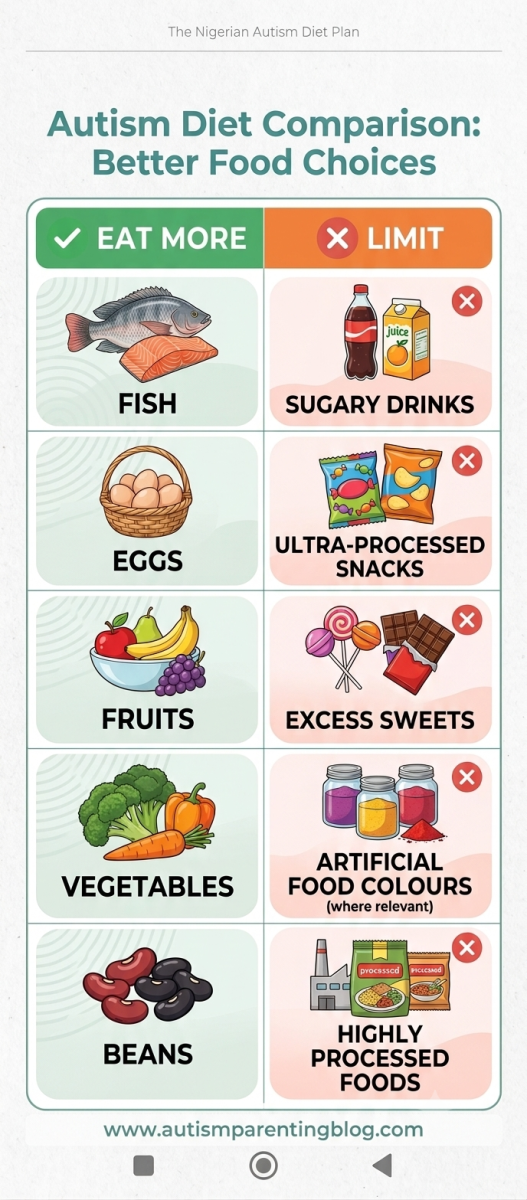
6. Foods to Avoid (and Why)
After a food sensitivity and food allergy test, some common food triggers may be identified. Also work with a qualified healthcare professional to avoid mistakes.
Common Offenders
Wheat and white bread: Contains gluten; linked to brain fog and inflammation.
Dairy: Casein protein may worsen gut symptoms.
Refined sugar and sweets: Feed yeast and harmful gut bacteria.
Artificial colors/flavors: Can worsen hyperactivity.
MSG in seasoning: Common in suya spice and cubes; causes irritability.
7. Healthy Nigerian Food Swaps That Support Healing
Unhealthy Food. Healthy Swap
Bread, pasta, noodles Fonio (Acha), oat or almond flour
Dairy milk( or those allergic to it) - Coconut, tigernut, or hemp milk
Commercial Vegetable oil - Coconut oil, tallow, red palm oil
Sugar/sweets - Date paste, raw honey, fruits
Maggi/Knorr - Homemade seasoning, sea salt, herbs
Wheat swallow - Unripe plantain fufu, yam flour or garri
You can also make:
- Gluten-free banana or citrus bread or any baked goods including sourdough
- Home-baked pizza with gluten-free tortillas
- Shawarma wraps using gluten - free wraps
- Homemade coconut yogurt or tigernut pap
Read how to transition your picky eater to healthy foods.
8. Juicing and Dehydrated Foods on a Budget
You don’t need imported snacks or fancy appliances. You can:
Juice fresh pineapple, cucumber, beetroot, ginger, carrot or get a reliable organic fresh juice vendor
Serve juices 2-3x a week for enzymes and detox support
Dehydrate apple slices, carrots, bananas using a local food dryer or sun drying or buy pre- packed healthy ones
Read healthy Nigerian foods and snacks that fit sensory needs.
9. Affordable Gut-Healing Tips (No Freezer Needed)
Not every family has access to a freezer or generator. That’s okay. Try these strategies:
- Batch cook and refrigerate with food storage containers
- Use glass jars eg. used BAMA mayonnaise containers, to keep fermented foods in the fridge compartment
- Join food-sharing communities to buy meat and veggies in bulk ( a group of 20 or more can buy a whole cow and share to freeze or dehydrate as preferred.)
- Buy seasonal produce for better prices
- Swap gas stove with charcoal or firewood only when essential
Eating well doesn’t have to be expensive. Local markets are goldmines for real, whole food.
Read Financial Planning for Autism.
10. How to Source Clean Food in Nigeria
Where to Look:
- Local markets: Unripe plantains, coconuts, vegetables, tubers
- WhatsApp food co-ops: Bulk buying from farms
- Farmers or abattoirs: For meat and bones (great for broth)
Start a small group with other parents to split costs-e.g., 10 families can buy a cow, freeze or dry their shares.
11. Combating Shame and Stigma Around Autism and Diet
In Nigerian communities, autism is still misunderstood. Many families face judgment when removing wheat or dairy from a child’s meal.
Remember:
You are not spoiling your child—you are helping them heal.
Culture evolves. Your child’s health comes first.
Find support in online groups, church communities, or therapy circles.
When you educate yourself, you empower others.
Read evidence-based answers on questions concerning autism.
12. Supplements to Consider (Always Consult Your Doctor)
- Fish oil (DHA/EPA) - Brain development
- Magnesium - Calms hyperactivity
- Probiotics - Gut balance
- Zinc and Vitamin D - Immunity and mood
Read Gut-friendly fermented foods for autism.
13. Common Parent Questions (FAQs)
Q: Can I try the diet without going 100% strict?
A: Yes. Start with one change—like removing dairy—and observe. Small consistent steps are better than perfection.
Q: Is garri safe?
A: Fermented cassava (like garri) is generally well tolerated. Avoid if moldy or unfermented.
Q: My child is a picky eater. Help!
A: Involve them in cooking, offer variety, and don’t force. Picky eating improves when gut health improves.
14. Conclusion- A Sustainable, Culturally-Sensitive Autism Diet
This journey isn’t easy-but it is worth it. Healing through food takes time and patience, but the rewards—improved speech, better behavior, fewer illnesses-make it worthwhile.
You are not alone. There’s a growing community of Nigerian parents walking this path with you. With faith, intentionality, and knowledge, you can help your child thrive-one meal at a time.
Follow @autismparentinginnigeria on Instagram for more.
References
1. Cryan JF, Dinan TG. Mind-altering microorganisms: the impact of the gut microbiota on brain and behaviour. Nat Rev Neurosci. 2012;13(10):701–712. https://doi.org/10.1038/nrn3346
2. McElhanon BO, McCracken C, Karpen S, Sharp WG. Gastrointestinal symptoms in autism spectrum disorder: a meta-analysis. Pediatrics. 2014;133(5):872–883. https://doi.org/10.1542/peds.2013-3995
3. Adams JB, Audhya T, et al. Nutritional and metabolic status of children with autism vs. neurotypical children, and the association with autism severity. Nutr Metab (Lond). 2011;8:34. https://doi.org/10.1186/1743-7075-8-34
4. Rossignol DA, Frye RE. A review of research trends in physiological abnormalities in autism spectrum disorders: immune dysregulation, inflammation, oxidative stress, mitochondrial dysfunction, and environmental toxicant exposures. Mol Psychiatry. 2012;17(4):389–401. https://doi.org/10.1038/mp.2011.165
5. Mazahery H, et al. Vitamin D and omega-3 fatty acid supplements in children with autism spectrum disorder: a randomized controlled trial. J Steroid Biochem Mol Biol. 2017;173:44–52. https://doi.org/10.1016/j.jsbmb.2017.01.007
6. Amminger GP, et al. Omega-3 fatty acids supplementation in children with autism: a double-blind randomized, placebo-controlled pilot study. Biol Psychiatry. 2007;61(4):551–553. https://doi.org/10.1016/j.biopsych.2006.05.007
7. Whiteley P, et al. Gluten- and casein-free dietary intervention for autism spectrum conditions. Front Hum Neurosci. 2010;4:180. https://doi.org/10.3389/fnhum.2010.00180
8. Millward C, Ferriter M, Calver S, Connell-Jones G. Gluten- and casein-free diets for autistic spectrum disorder. Cochrane Database Syst Rev. 2008;(2):CD003498. https://doi.org/10.1002/14651858.CD003498.pub3
9. Hyman SL, et al. Nutrient intake from food in children with autism. Pediatrics. 2012;130(Suppl 2):S145–S153. https://doi.org/10.1542/peds.2012-0900E
10. Sanctuary MR, et al. Probiotic/medical food supplementation in patients with autism spectrum disorder. Med Hypotheses. 2019;122:63–66. https://doi.org/10.1016/j.mehy.2018.10.021
11. UNICEF Nigeria. Nutrition Profile – 2022 Update. https://www.unicef.org/nigeria/reports/nutrition-profile
12. WHO Africa. Feeding children for the best start in life. https://www.afro.who.int/news/feeding-children-best-start-lif
Download Free Guide