

Best Sensory Toys for Autism in Nigeria
If you're searching for the best sensory toys for autism in Nigeria, then you're welcome. Many parents notice that their child loves spinning objects, chewing on clothes, jumping constantly, covering their ears, or seeking certain textures. These behaviours are often related to how the brain processes sensory information.
The good news is that the right sensory toys can help children regulate their emotions, improve focus, reduce anxiety, and support learning. However, not every toy labelled "sensory" is suitable for every child. Choosing the right toy depends on your child's unique sensory needs.
In this guide, we'll explain what sensory toys are, who they help, and the best options available for children with autism in Nigeria.
What Are Sensory Toys?
Sensory toys are specially designed tools that stimulate one or more of the body's senses, including:
- Touch
- Sight
- Hearing
- Movement (vestibular system)
- Body awareness (proprioception)
- Oral sensory input (chewing and sucking)
Rather than simply entertaining a child, sensory toys help them process sensory information more effectively and can make everyday activities easier.
Read our earlier article on sensory play ideas.
Do All Children with Autism Need Sensory Toys?
No.
Every autistic child is different. Some actively seek sensory input, while others are very sensitive to certain sounds, textures, or movements.
For example:
- A child who constantly jumps may benefit from heavy-work or movement activities.
- A child who chews clothing may benefit from safe oral sensory tools like chewelry.
- A child who becomes overwhelmed by noise may benefit from noise-reducing headphones instead of a toy.
The best sensory toy is the one that matches your child's sensory profile.
Best Sensory Toys for Autism in Nigeria
1. Fidget Toys
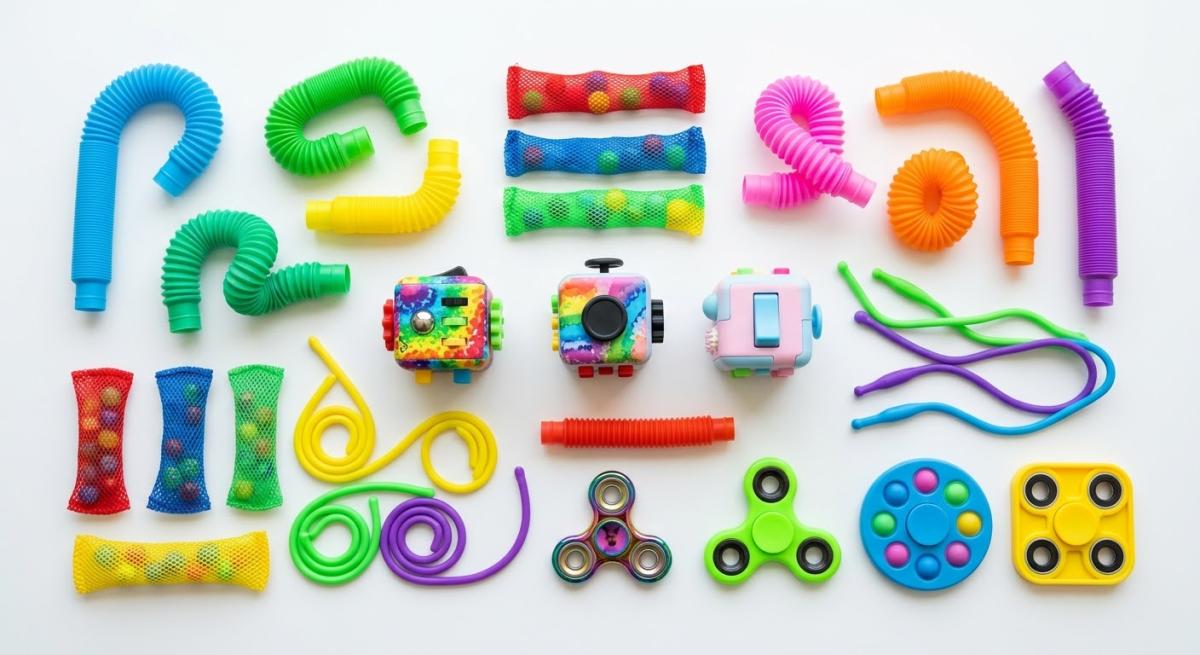 Fidget toys help children who need to keep their hands busy while concentrating.
Examples include:
- Fidget cubes
- Fidget spinners
- Marble mesh toys
- Stretchy strings
- Pop tubes
These can improve attention during homework, therapy sessions, or classroom activities.
2. Pop-It Toys
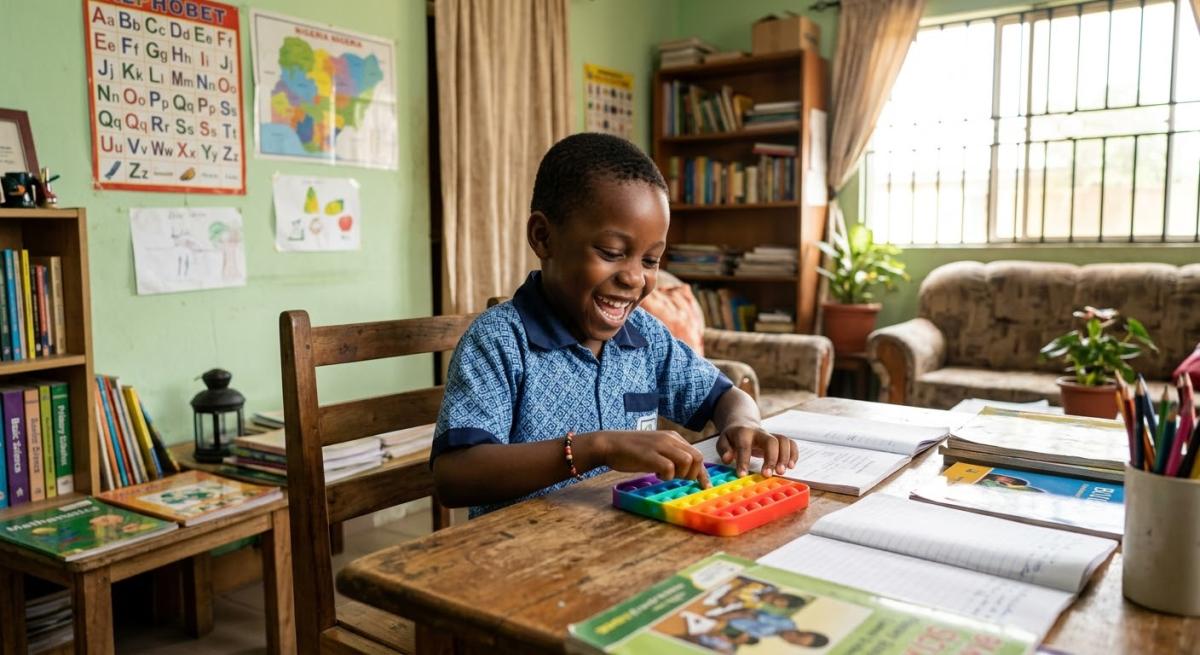 Pop-it toys provide calming tactile feedback and are popular because they are simple, portable, and enjoyable.
They may help reduce anxiety and keep little hands engaged.
3. Textured Sensory Balls
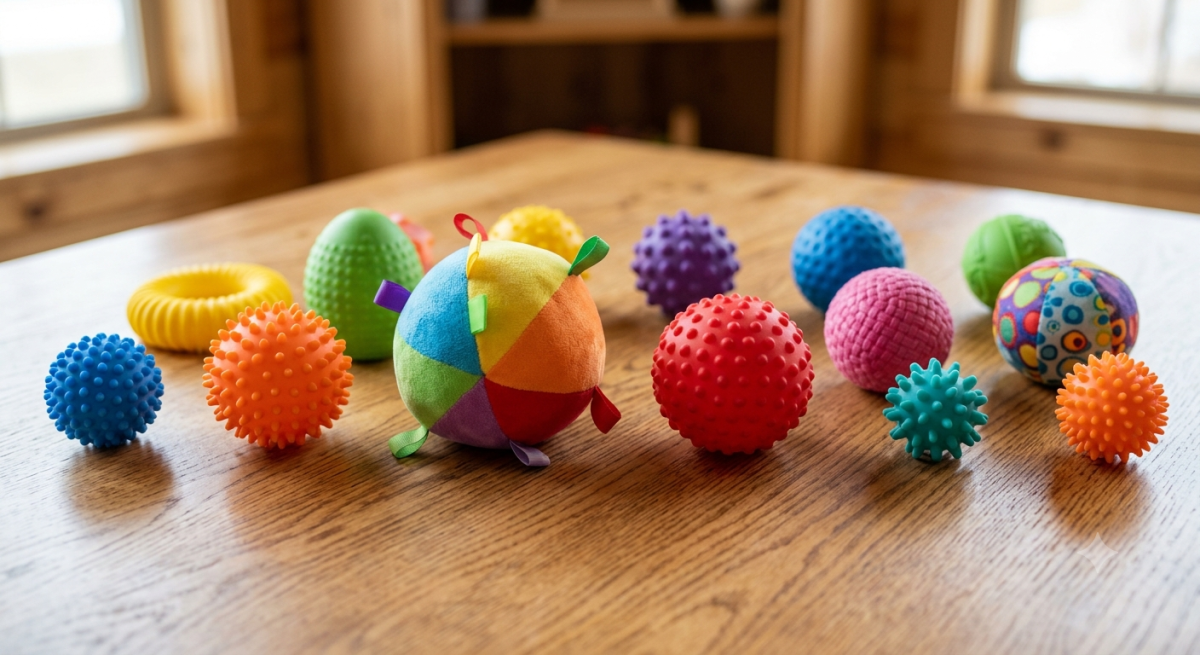 These balls come in different sizes and textures.
Children can:
- squeeze them
- roll them
- bounce them
- explore different textures
They are excellent for tactile exploration.
4. Sensory Brushes
Some occupational therapists recommend sensory brushing as part of a structured sensory programme.
Parents should only use this technique after receiving appropriate guidance from a trained therapist.
5. Therapy Putty
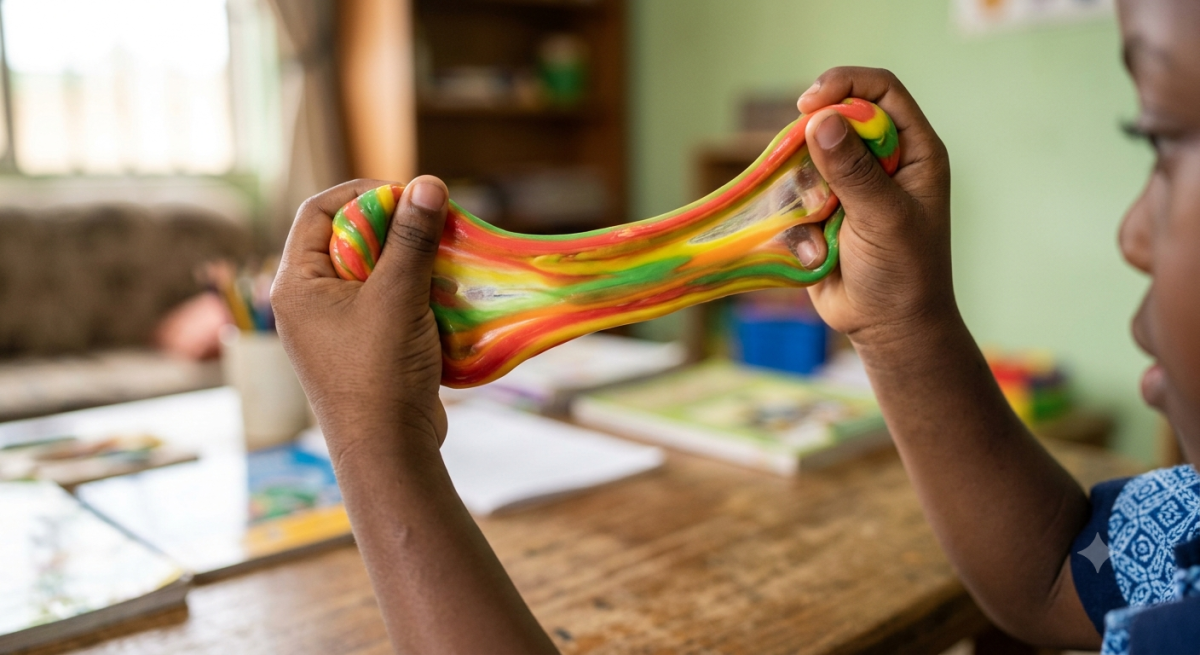 Therapy putty strengthens hand muscles while providing calming sensory input.
It is especially useful for improving fine motor skills needed for handwriting and self-care.. Read this article on messy play and autism.
6. Balance Boards
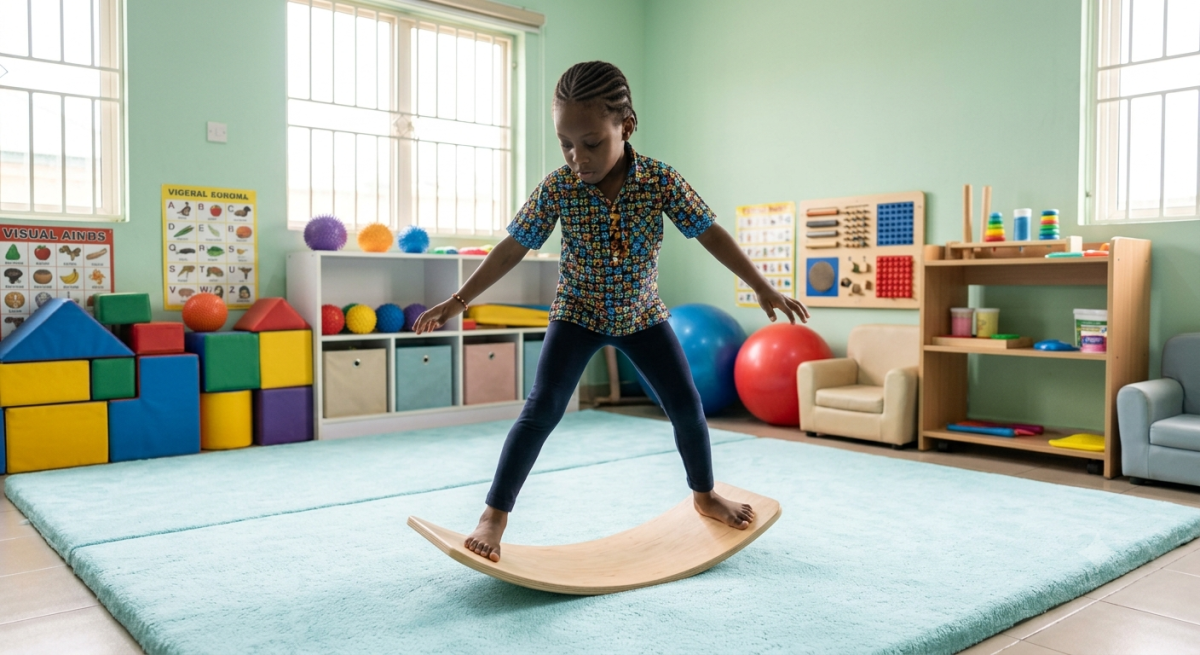 Balance boards help improve:
- balance
- coordination
- body awareness
- core strength
These are particularly beneficial for children who constantly seek movement.
7. Weighted Lap Pads
 Weighted lap pads provide deep pressure input, which some children find calming during:
- homework
- meals
- classroom activities
- travelling
Use weighted products only with guidance from your child's healthcare provider or occupational therapist.
8. Chewelry
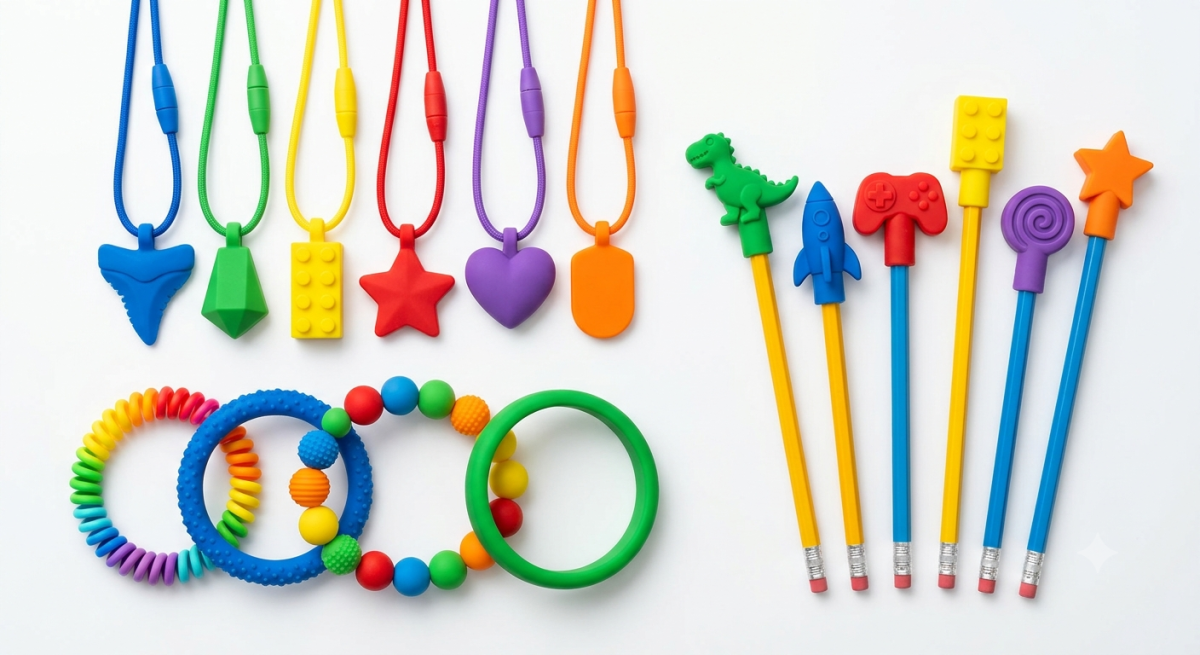 Many autistic children chew on:
- shirts
- pencils
- toys
- fingers
Chewelry offers a safer alternative by providing durable silicone items designed specifically for oral sensory needs.
9. Sensory Swings
Sensory swings provide vestibular input and can help some children improve body awareness and self-regulation.
They should always be installed safely and used under adult supervision.
10. Visual Sensory Toys
Examples include:
- bubble tubes
- fibre optic lights
- liquid timers
- projector lights
These are often used as calming tools during quiet time.
How to Choose the Right Sensory Toy
Before buying any sensory toy, ask yourself:
- Does my child seek movement?
- Does my child avoid certain textures?
- Does my child chew objects?
- Does my child become overwhelmed by noise?
- Does my child constantly touch everything?
The answers will help guide your choice.
Are Expensive Sensory Toys Better?
Not necessarily.
Many children benefit from simple, affordable sensory tools when they are matched to the child's specific needs. The most expensive product is not always the most effective.
Where Can You Buy Sensory Toys in Nigeria?
Sensory toys are becoming easier to find through specialised autism suppliers, therapy centres, and reputable online stores.
If you're unsure what to buy, speak with your child's occupational therapist or healthcare provider for personalised recommendations.
Safety Tips
- Always choose age-appropriate toys.
- Avoid toys with small parts that could be swallowed.
- Supervise children during use, especially younger children.
- Replace damaged toys promptly.
- Follow manufacturer instructions for cleaning and maintenance.
Conclusion
Sensory toys are not a cure for autism, but they can be valuable tools that support emotional regulation, attention, communication, and daily functioning when used appropriately.
The key is to choose toys based on your child's individual sensory needs rather than buying every trending product.
With patience, observation, and guidance from qualified professionals, you can build a sensory toolkit that helps your child thrive.
Frequently Asked Questions (FAQ)
What is the best sensory toy for autism?
There is no single best toy. The right choice depends on your child's individual sensory needs. Fidget toys, therapy putty, chewelry, textured balls, and weighted lap pads are among the most commonly recommended options.
Where can I buy sensory toys in Nigeria?
You can find sensory toys through specialised autism suppliers, therapy centres, and selected online retailers. More local options are becoming available across Nigeria.
Are sensory toys scientifically proven?
Research suggests that some sensory tools may help certain children improve self-regulation, attention, and participation in daily activities. However, effectiveness varies from child to child, and sensory toys work best as part of a broader support plan.
At what age can a child start using sensory toys?
Many sensory toys can be introduced in early childhood, provided they are age-appropriate and used safely under adult supervision.

Dr. Doris Dominic is a medical doctor, autism health educator and health content writer who provides relatable guidance on autism spectrum disorder (ASD), early signs of autism, developmental delays, speech development, behavioral challenges, sensory processing, and nutrition for children with autism. She translates complex medical information into practical, actionable strategies to support early intervention and informed...